Treatments — Skin
Mole Removal
Mole Removal by Mr. BanwellMr Paul Banwell is a Consultant Plastic Surgeon and specialises in mole removal with minimal scarring in the South East and London area.
Treatments — Skin
Mr Paul Banwell is a Consultant Plastic Surgeon and specialises in mole removal with minimal scarring in the South East and London area.
Many moles (medical term = ‘naevus’ or ‘naevi’ ) are not only cosmetically unacceptable, but they may also be a nuisance. They may get cut during shaving, bleed, or get caught on clothing, necklaces or combs. Some moles are “beauty spots”, but others may look unattractive and be a source of concern. The same may apply to small birth marks, skin tags, warts, cysts, papillomas and other lumps and bumps on the skin which need removing.
We have clinics for surgical mole removal in East Grinstead, Tunbridge Wells, Haywards Heath, Brighton, Sevenoaks, Worthing, Horsham, Caterham, Burgess Hill, Eastbourne, Westerham, Oxted, Reigate, Guildford and London. Please phone the Banwell Clinic today on 01342 330302.
"Mole Removal is a simple procedure performed under local anaesthetic."
SURGERY TIME
30 - 60 minutes
HOSPITAL STAY
Outpatient procedure (sometimes day case main theatre)
ANAESTHETIC ASSESSMENT
No
PRE ADMISSION TESTS
No
SLEEPING POSITION
Sleeping with pillows for 1 week
REASONABLY MOBILE
1 day
WASHING
Can shower immediately.
DRIVING
Following day
EXERCISE INCLUDING GYM
2 weeks off
TIME OFF WORK
1 day

Please contact Mr Banwell’s office on 01342 330302 or email help@paulebanwell.com for further information.
From £620

See the results of Mr. Paul Banwell’s work on real patients!
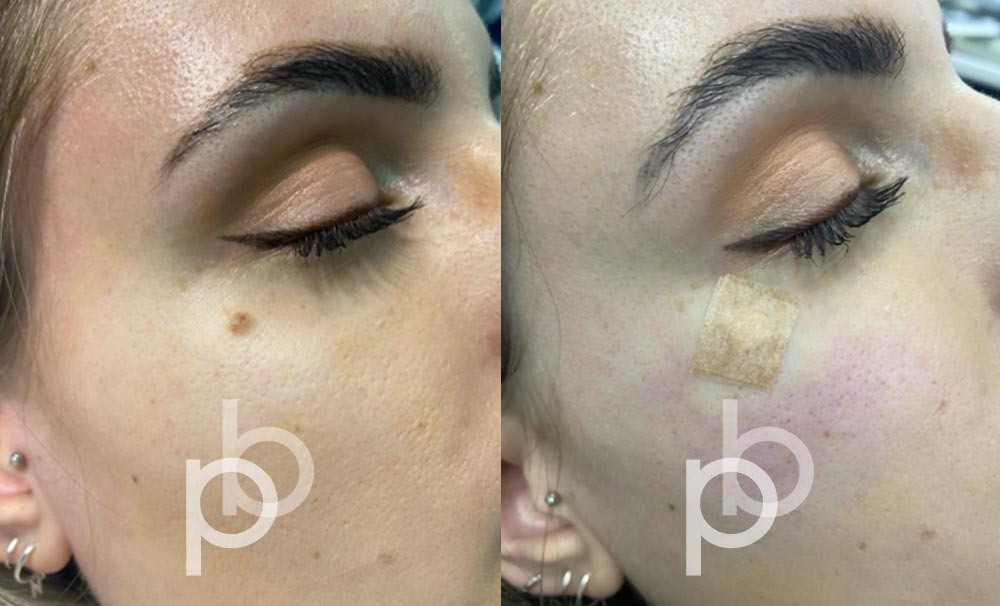
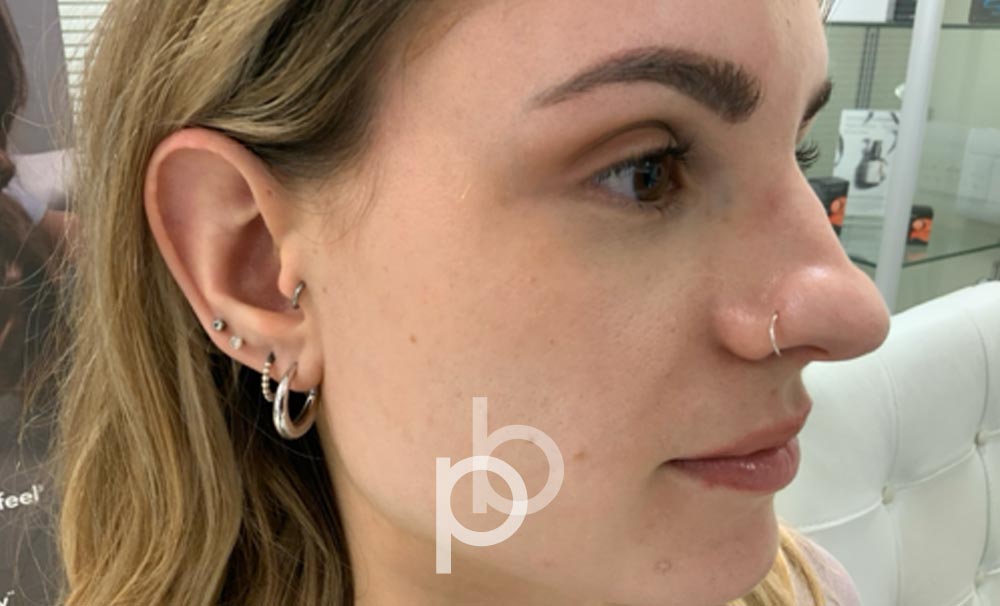
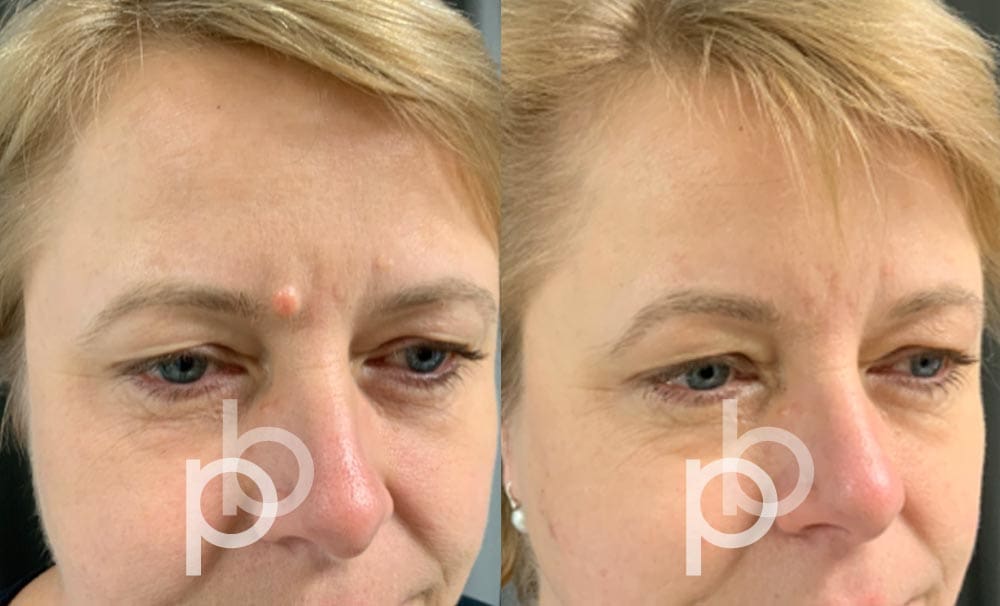
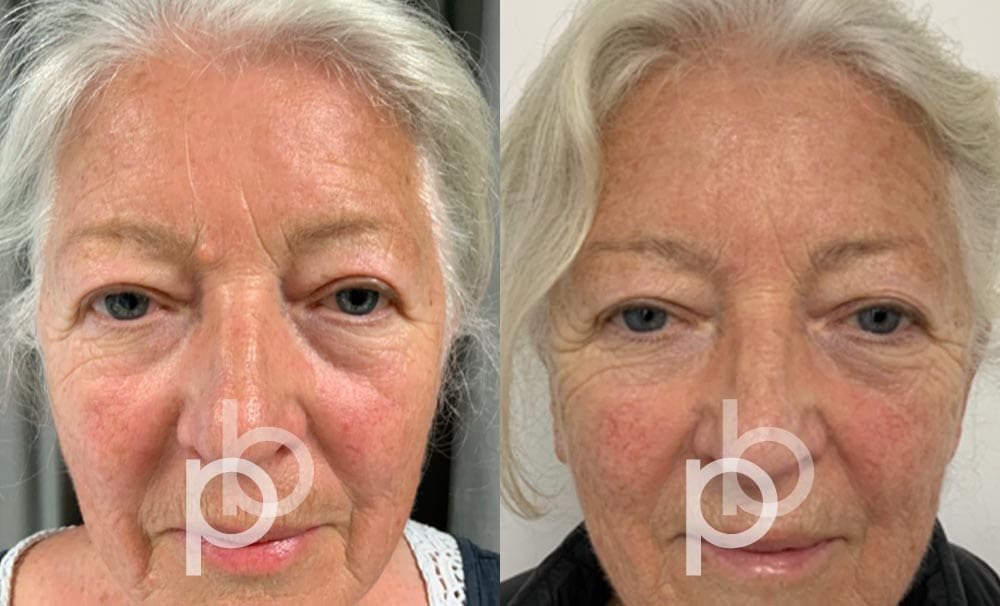
Doctors know that most moles can be removed simply and quickly without the need to cut the skin or have stitches (otherwise known as shave excision) although sometimes stitches may be required. The expert skin specialist, Mr Paul Banwell, Consultant Plastic Surgeon and Skin Expert, uses both these methods to remove moles, skin tags and birthmarks. These small procedures are carried out under a local aneasthetic (with you awake) but sometimes sedation or a general anaesthetic might be preferable.
Moles on the face and neck respond best to removal techniques. Other body areas are more likely to leave a small patch of pale skin when the mole has been removed. Of course, all moles are examined by Mr Banwell who will identify and diagnose it before removal and if there is any concern that the moles are not completely benign (harmless growths) then sampling of tissue may be recommended with the pathologist. In these cases we like to be sure the mole is not possibly cancerous.
Alternatively Mr Banwell may decide to remove the whole mole (this is termed an excision biopsy). In most cases the moles will be sent away to the laboratory for analysis unless the surgical removal is purely for cosmetic reasons. You are in good hands as Mr Banwell performs hundreds of these procedures every year and was also the Founder and Head of the Melanoma and Skin Cancer Unit (MASCU) in East Grinstead. Mr Banwell has clinics for mole removal, surgical mole excision and skin tag removal in East Grinstead, Haywards Heath, Tunbridge Wells, Worthing, Brighton and London. So if you would like mole removal or surgical mole removal in Sussex, Kent or Surrey please phone the office on 01342 330302.
Mr Banwell is able to remove hairy moles, unsightly moles, skin tags, warts, warty lesions, keratotic lesions, skin cancers, basal cell carcinomas (BCC), squamous cell carcinomas (SCC) and malginant melanomas (MM).
For a consultation please phone 01342 330302 or book on this site.
Useful downloadable materials tailored to this procedure.
The decision for cosmetic surgery should not be taken lightly. This is why Mr Banwell believes that the consultation process with him and our Concierge is so important. Regardless we are here to hold your hand throughout your journey and answer any questions you may have. That leap of faith may be anxiety-provoking but please know that we will always be here to catch you!
This refers simply to the surgical removal (cutting out) of a mole or “lump & bump” on the skin. The resultant wound is usually then put back together with stitches (sutures) but in some cases the lump/mole may be ‘shaved’ off and stitches are not required. There have also been instances of a dermatologist or doctor freezing a mole before removal.
Mole removal procedure is usually performed under local anaesthetic (with you awake and the skin numbed by giving an injection with a needle – just like at the dentist). This is a quick and simple procedure with a short recovery period which will be thoroughly explained to you.
The operation itself may take between 15 – 60 minutes, depending upon what is being removed. You will be in the operating theatre for slightly longer than this to prepare for the surgery process and have the injection of the local anaesthetic.
Aftercare following mole removal surgery will see the wound being dressed with brown micropore tape. This can get wet (showering or washing) but you should not soak in the bath. You will be able to shower the day after surgery, after which you can pat the tape dry with a towel then use a hairdryer. It is important to ensure the tape is fully dried. This will stay in place until after your stitches are removed. Mr Banwell may give you antibiotics in some instances.
You will be able to return to sedentary activity (i.e. an office job) the following day, but should avoid strenuous physical activity for a minimum of 2-weeks. Stitches are removed between 1 and 2 weeks after the surgery. If your lump was shaved off then you will just leave the dressing to fall off in time.
You will be able to drive the following day if you are careful. If the operation was on your face or head, it is important not to bend down or lift things for 48-hours after the operation – this is to minimise the risk of bleeding (for example, when doing up shoe laces, bring your foot up whilst sitting down, rather than bending down). It is also a good idea to use a couple of pillows when sleeping to avoid laying flat. This helps minimize swelling and there may be redness and scarring.
This is a safe, reliable and simple procedure with a low complication rate.
These include wound infection, bleeding (usually just bleeding through the dressing), pain, numbness, damage to nerves and vessels, delayed wound healing and the formation of a lumpy scar (known as a hypertrophic or keloid scar). A further problem occasionally encountered is “suture spitting” – this refers to the deeper dissolvable stitches coming out of the wound often after several weeks (and rarely months) after the surgery.
Mr. Banwell’s team at the Pantheons Clinic would be delighted to help at any time so please feel free to call HQ on 01342 330302 or email help@paulebanwell.com.

Skin Health & Skin Care
Mr Banwell and his team at The Pantheons Clinic in Sussex, Kent & Harley Street, London are considered international experts in skin health, photoprotection and state of the art skin treatments.

Skin Cancer Removal
A skin cancer is a ‘growth’ of tissue made up from cancer cells which continue to multiply.
Lipoma Removal
Fatty lumps under the skin are extremely common and can usually be removed fairly easily.
Scar Revision
Do you have a scar that you do not like? Perhaps you had issues with delayed healing or infection following previous surgery?
Explore selection of related therapies, which have been carefully chosen to enhance and complement your outcomes.

Before the procedure, would you like to see the new you? With the help of the most popular 3D plastic surgery program in the world, you can now virtually “try on” several breast implants from the comfort of your own home. Don’t forget to save your pictures so you can show them to our surgeon when you visit.
View more reviews on:



Dr Paul founded the award-winning Banwell Clinic 10 years ago and this has become synonymous with innovation and premium care. To commemorate a decade of excellence and expansion of the team we have rebranded the Practice to PANTHEONS Clinic – literally ‘a collection of top experts’ – reflecting our commitment to high quality patient care, patient safety and the drive to make cutting edge technologies available to our ever-growing number of patients.
Disclaimer: Please be aware that these notes have been made for purely information purposes and make no recommendations for surgery.
Download BAAPS Information Sheets



Copyright 2026. Site by Blow Media 
 Back
Back
Breast
 Back
Back
Skin