Treatments — Skin
Skin Cancer Removal
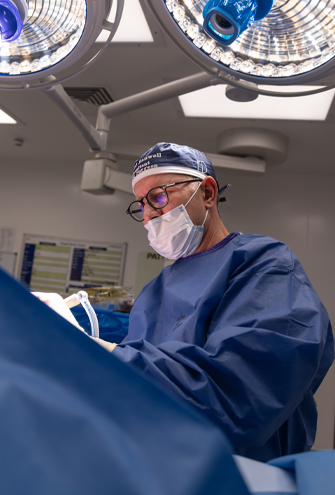
Skin Cancer Removal by Mr. BanwellA skin cancer is a ‘growth’ of tissue made up from cancer cells which continue to multiply.
Treatments — Skin
A skin cancer is a ‘growth’ of tissue made up from cancer cells which continue to multiply.
Interestingly, whilst most types of malignant tumour tend to grow fast and then spread (metastasise) to other parts of the body, this is more unusual in the case of skin cancer.
In fact, only a small proportion of skin cancers actually cause problems elsewhere in the body. Nethertheless, early recognition and treatment is recommended for all forms of skin cancer and Mr Banwell is a world renowned skin cancer specialist.
"We are here to treat skin cancer quickly and efficiently and provide maximum support."
TREATMENT TIME
30-90 MINUTES
HOSPITAL STAY
Outpatient or inpatient depending on complexity
ANAESTHETIC ASSESSMENT
Maybe
PRE ADMISSION TESTS
Maybe
SLEEPING POSITION
Sleeping on back recommended for a week
REASONABLY MOBILE
As directed by Mr Banwell
WASHING
As directed by Mr Banwell
DRIVING
Depends on complexity of procedure
EXERCISE INCLUDING GYM
As directed by Mr Banwell
SEXUAL ACTIVITY
1 week
FULL RECOVERY
1-2 weeks
TIME OFF WORK
1 week

Please contact Mr Banwell’s office on 01342 330302 or email help@paulebanwell.com for further information.
Please Enquire
MELANOMA (‘MALIGNANT MELANOMA’)
This type of skin cancer develops from melanocytes. These are the pigment cells at the base of the superficial layer of the skin which can become abnormal.
NON-MELANOMA SKIN CANCER (NMSC)
These are divided into:
We know that skin cancer is caused by exposure to the Solar Constant – ie. the combination of ultraviolet radiation (UV-A and UV-B), infrared (IR) and visible light from the sun. Intense exposure via sunbed use also dramatically increases risk of skin cancer formation (between 30-70%) and thus avoidance of sunbeds is mandatory.
Prevention therefore is the key and minimising sun exposure as much as possible is fundamental. Sun burn episodes are highly predictive of future skin cancer formation so should be avoided. Simple measures such as avoiding the midday sun, wearing a hat, sunglasses and liberal use of sunscreen is key. Use of sunscreen – sun protection factor, SPF – has been shown to reduce the incidence of skin cancer (as well as cause less ageing!). Mr Banwell and his team therefore advocate daily use of sunscreen throughout the year and we can recommend the latest innovations in SPFs. Our current favourite is B3-T from Rationale Skin Care.
Treatment of skin cancer is essentially divided into surgical treatments, photodynamic therapy (PDT) and medical treatments.
Simple surgical excision (removal) is probably the commonest modality used to treat both primary and recurrent skin cancers. Most can be performed under a local anesthetic as an outpatient procedure but some cases will require admission and treatment under a general anaesthetic. However, in some cases radiotherapy or medical treatments might be more suitable – if these is more appropriate for you then Mr Banwell will discuss these options.
Surgical removal of a skin cancer involves removing the growth and a certain amount of normal-appearing skin surrounding it (the “margin”): for basal cell and squamous cell carcinomas, margins are often 2 to 5 mm. Most of the time it possible to close the defect by simply sewing up the wound with sutures. However, this is not always possible and a skin graft or reconstruction using a ‘local flap’ (moving skin in the vicinity from one place to another) may be required – this is slightly bigger procedure and the recovery might take a little longer. Again, Mr Banwell will discuss the most suitable method in your particular case.
In over 95% of cases for primary Basal cell carcinomas (BCC) and Squamous Cell carcinoma (SCC) we are able to remove all of the skin cancer in one sitting; of course this is also dependent on the site, size, and pattern of the tumour. Often a further operation is required to take further tissue – this is considered a ‘belt and braces’ approach to minimise any future problems of recurrence and is termed a ‘wide local excision’.
Removal of skin cancers may be performed in the out-patient or inpatient setting depending on the extent and location of the lesion.
SURGERY FACT SHEETS
Click here for information sheet on Excision of Lesion
Click here for information on Split Skin Grafts (SSG)
Click here for information on Full Thickness Skin Grafts (FTSG)
Click here for information on Local Flap Reconstruction
Photodynamic Therapy (PDT)
Photodynamic therapy is a novel, advanced and refined treatment to treat severe sun-damaged skin, pre-malignant conditions (actinic keratoses and Bowen’s disease) as well as a particular subtype of basal cell carcinomas – superficial BCC (please note that other forms of BCC are not suitable for this kind of treatment).
These abnormal skin cells will absorb a chemical (topically applied to the skin) that, when exposed to light, destroys these abnormal cells. This process is called ‘Photodynamic Therapy’ (PDT).
Useful downloadable materials tailored to this procedure.
The decision for cosmetic surgery should not be taken lightly. This is why Mr Banwell believes that the consultation process with him and our Concierge is so important. Regardless we are here to hold your hand throughout your journey and answer any questions you may have. That leap of faith may be anxiety-provoking but please know that we will always be here to catch you!
Process of PDT
Once your skin assessment and diagnosis has been made and you are ready for PDT, Mr Banwell’s team will schedule 2 appointments. In outpatients, Mr Banwell will perform some curettage (superficial scraping of the lesion) followed by application of a cream called ALA (eg. Metfix). This cream will be applied to your skin and allowed to ‘incubate’, usually for about 2-3 hours. The treatment area is then exposed to a special light (eg. Actilight) to activate the ALA. This process stimulates your body’s immune system to destroy the abnormal sun-damaged cells. It is quite normal to get some redness, scaling and crusting in the treated areas following treatment; unfortunately some patients find the light activation treatment a little uncomfortable but this is usually short-lived. However, any crusting should heal within a few days to a week after which the treated area should be smoother; two treatments may be required to help heal the lesion.
Excitingly, some new so-called DAYLIGHT PDT formulations are also coming on to the market which allows rapid treatment in clinic with minimal inconvenience and return to clinic for activation. Mr Banwell and The Banwell Clinic are currently investigating and trialling these new treatment regimes.
CRYOTHERAPY (CRYOSURGERY)
Cryotherapy (using liquid nitrogen) is the process of freezing skin lesions. The extreme cold destroys skin tissue and also helps stimulate the immune system. Both processes help to clear/remove any lesion.
This is a very useful alternative to surgery for pre-cancerous lesions (actinic keratoses and Bowen’s disease) as well as for benign lesions such as warts and seborrhoeic keratoses.
HOW DOES IT WORK?
The cryogen is usually liquid nitrogen, though other substances can be used. It is usually applied with a spray-gun, but sometimes a cotton tip is used. Traditionally 3 ‘freeze-thaw’ cycles are used lasting a few seconds for each cycle. It stings when applied and can cause painful blistering within a few hours. This usually settles spontaneously and forms a scab.
Healing times are around 1-2 weeks on the face, 2-3 weeks on the trunk and up to 6 weeks on the lower legs. This is a very safe treatment but possible complications include scarring, infection or hypopigmentation (whitening) of the area treated. If the lesion recurs, it may need further treatment with cryotherapy or possibly another option such as surgery or specialised creams.
IMMUNE MODULANTS
Immune modulants are chemotherapeutic topical creams that stimulate the body’s own immune system to fight against the abnormal sun-damaged cells (actinic keratosis) or skin cancer cells (eg. Superficial BCCs).
5 FLUORO-URACIL (5-FU)
Topical 5-fluorouracil 5% cream (Efudix™) is a chemotherapeutic agent prescribed by a skin cancer specialist such as Mr Banwell. It may be very effective in the management of actinic keratoses , in-situ squamous cell carcinoma (Bowen’s disease) but is also effective for superficial basal cell carcinomas [please note that it is not effective for other types of BCC]. It is also sometimes used in combination with salicylic acid in the management of persistent and symptomatic viral warts in adults.
It works best on face and scalp but can be effective on other areas too. Pre-treatment with a topical retinoid may enhance the effect of fluorouracil by peeling off the top layer of skin.
The optimal way to use fluorouracil is unknown. Most skin cancer specialists recommend daily applications for 4 weeks, which may be repeated as necessary. To reduce the severity of adverse reactions, others recommend treatment for a few days, repeated as necessary, or twice weekly applications over several months.
Fluorouracil creates a cytotoxic destructive reaction to dysplastic (abnormal) cells. Treated dysplastic lesions become red, scaly and tender over several days then erode or ulcerate with continued treatment. The more dysplastic the lesion, the more vigorous the response. Treatment should be discontinued at the eroding stage to allow re-epithelialisation over the next one to four weeks.
IMIQUIMOD
Imiquimod (Aldara™) is another immune response modifier / immune modulant which is even stronger than 5 FU. It is used to treat actinic keratoses, Bowen’s and superficial basal cell carcinomas (BCC)s. It may also be useful for the treatment of pigmented patches of skin.
As mentioned above with 5-FU, the degree of inflammation with Aldara is quite variable. The greater the inflammation, in general the shorter the time and number of applications required to eradicate the lesion. About 10% get little or no inflammatory response and treatment is then nearly always ineffective. On the whole, as with other topical treatments, facial lesions clear quicker than those elsewhere. A course of treatment with Aldara usually ranges between 4 to 16 weeks.
PICATO
Picato is the latest generation immune modulant used for severe actinic lesions and BCCs. The chemical name for Picato is ingenol mebutate and it is formulated as a gel but unlike other immune-modulants, it is important to keep in the fridge. Picato use for skin cancers and actinic lesions is only used for a short period (2-3 days) and can cause quite significant responses on the skin with redness (erythema) and crusting. Whilst the manufacturers explain that most skin reactions settle after a few weeks, Mr Banwell usually observes that the erythema a skin changes can take 2-3 months to completely settle. Mr Banwell can chat to you regarding your suitability for Picato (ingenue meditate) treatment in Sussex, Kent, Surrey and London.

The cause of most skin cancers is secondary to sun damage to the skin or from sunbed usage. About 90% of NMSCs and about 60% of melanomas are thought to be caused by excessive exposure to the sun. In particular, past episodes of sunburn significantly increase the risk. It is the ultraviolet (UV) radiation in the sunshine which does the damage although more recent research has shown that Infrared (IR) and visible light also plays a key role. Skin cells which are damaged are at greater risk of becoming abnormal and cancerous. Although skin cancer is rare in children, the amount of sun exposure during childhood is thought to increase the risk of developing skin cancers in adult life. Therefore, it is vital to protect children from too much sunshine.
All three main types of skin cancer – BCC, SCC and melanoma – are curable if they are detected at an early stage. A small minor operation or other method to remove the affected area of skin is all that is required in early cases.
For non-melanoma skin cancers (BCC & SCC) the overall cure rate is over 95%, even for those which have been present for a while. However, the larger they grow, the more difficult they are to treat. More extensive surgery with skin grafting or other forms of reconstruction as well as other localised treatments may be needed if they grow large or deep before they are treated.
For melanomas, the risk of spread to other parts of the body is higher than for Squamous Cell Carcinomas. This is why urgent early treatment is recommended. If it has already spread to other areas of the body then there is less chance of a cure. Other treatments
Keep a close check on the look of existing moles or marks on your body so that you will know if there has been any change. If you notice any new growth or new change on your skin then you should consult with a doctor or be referred to Mr Banwell. In particular, if you notice any change in the size, shape, colour or outline of an existing mole, or if a new dark area of skin develops then you should be seen by a skin cancer specialist such as Mr Banwell. Please observe for any moles that also crust, itch or bleed.
Most skin cancers are caused by excessive exposure to the sun. We should all limit our sun exposure in the summer months (or all year when in hot countries nearer the equator) by:
In particular, children should be protected from the sun. Sunburn or excessive exposure to the sun in childhood is thought to be the biggest risk factor for the developing of skin cancer as an adult.
Mr. Banwell’s team at the Pantheons Clinic would be delighted to help at any time so please feel free to call HQ on 01342 330302 or email help@paulebanwell.com.


Skin Health & Skin Care
Mr Banwell and his team at The Pantheons Clinic in Sussex, Kent & Harley Street, London are considered international experts in skin health, photoprotection and state of the art skin treatments.
Lipoma Removal
Fatty lumps under the skin are extremely common and can usually be removed fairly easily.
Scar Revision
Do you have a scar that you do not like? Perhaps you had issues with delayed healing or infection following previous surgery?
Mole Removal
Mr Paul Banwell is a Consultant Plastic Surgeon and specialises in mole removal with minimal scarring in the South East and London area.
Explore selection of related therapies, which have been carefully chosen to enhance and complement your outcomes.

Before the procedure, would you like to see the new you? With the help of the most popular 3D plastic surgery program in the world, you can now virtually “try on” several breast implants from the comfort of your own home. Don’t forget to save your pictures so you can show them to our surgeon when you visit.
View more reviews on:



Dr Paul founded the award-winning Banwell Clinic 10 years ago and this has become synonymous with innovation and premium care. To commemorate a decade of excellence and expansion of the team we have rebranded the Practice to PANTHEONS Clinic – literally ‘a collection of top experts’ – reflecting our commitment to high quality patient care, patient safety and the drive to make cutting edge technologies available to our ever-growing number of patients.
Disclaimer: Please be aware that these notes have been made for purely information purposes and make no recommendations for surgery.
Download BAAPS Information Sheets



Copyright 2026. Site by Blow Media 
 Back
Back
Breast
 Back
Back
Skin